Hey there, if you’re in the market for a steel structure warehouse (or just curious what goes into building one that actually works), I’m gonna break down the common steels we use here at our shop—no stuffy textbook jargon, promise. I’ve been in this game for over 8 years, and I’ve seen way too many clients pick the wrong steel because they didn’t ask the right questions, so let’s keep it real. Steel Structure Warehouse
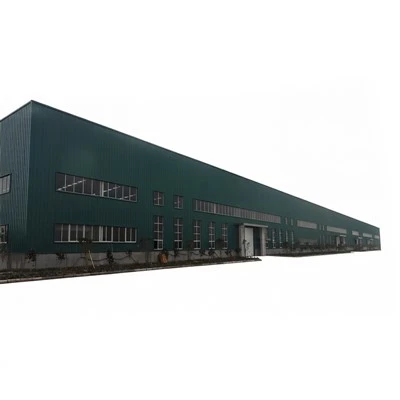
First off, let’s get one thing straight: not all steel is created equal. A warehouse sitting in a snowy, icy part of Minnesota needs way different steel than one in the hot, humid swampy areas around Florida, right? And a warehouse for storing delicate electronics isn’t gonna use the same stuff as one hauling heavy construction equipment. That’s why we don’t just grab a random steel roll off the shelf—we match the grade to exactly what the client needs.
The first big one we use is ASTM A36. This is basically the workhorse of the steel world—don’t let the number fool you, it’s super versatile. Most of our standard steel structure warehouses (you know, the ones for general storage, small manufacturing bays, or basic distribution) run on A36. What makes it so great? It’s cheap, it’s easy to cut, weld, and bolt together—perfect for our team to put up fast, which keeps costs down for the client. But wait, it has a catch: it’s not the best if you’re dealing with super harsh conditions. If you’re building a warehouse near the coast, where salt air is gonna eat away at metal, A36 will rust faster than a bike left out in the rain. Also, it’s not strong enough for really heavy loads—like if you’re stacking 50-ton shipping containers, A36 might bend under the pressure. I’ve had a client test A36 for that exact heavy storage use, and we had to nix it because it couldn’t handle the weight. Stick to A36 for general, low-stress, inland projects. It’s the default for a reason, and 9 times out of 10, that’s exactly what a first-time client needs.
Next up is ASTM A572 Grade 50. This is our go-to when the project needs a little extra oomph without breaking the bank. A572 Grade 50 has way higher yield strength than A36—like, 50,000 psi vs. A36’s 36,000 psi. That’s a big difference. So if you’re building a warehouse with mezzanines (extra floors for storing stuff), or a big open bay where you don’t wanna put extra columns, or you need to lift super heavy equipment inside, Grade 50 is perfect. We use this a lot for small manufacturing clients—like the ones that make furniture or car parts, where they have big machinery that needs floor space. It’s still easy to work with, just like A36, so our fabrication team doesn’t have to change their process much. The only downside? It’s a tiny bit pricier than A36, and still not great for salt air. But for most non-coastal, medium-to-heavy load projects, this is our top pick. I had a small auto repair shop client last year go with Grade 50 for their 60-foot clear-span bay, and they’ve been loving it—no bending, no sagging, and they fit all their lifts and tools perfectly.
Now, if you’re building somewhere that’s gonna face tough weather—think places with tons of snow, freezing temperatures, or coastal salt air—we move up to ASTM A588. This is often called “weathering steel,” but don’t get that confused with rusting away. A588 forms a protective layer of rust on the surface when it’s exposed to the elements, so it doesn’t corrode deeper like regular steel. That’s why it’s perfect for coastal warehouses, or places with super humid, rainy climates. Wait, but here’s the thing: you can’t paint it easily if you want that protective layer to work. We tell clients upfront—if you want a warehouse that’ll last 30+ years without constant touch-ups, A588 is way better than A36 or Grade 50 near the ocean. It’s also stronger than A36, around 50,000 psi too, so it handles heavy loads just fine. We used A588 for a project down in Texas Gulf Coast last year, and the client said even after a year of salt air and hurricanes, there’s barely any rust on it—way less than if we’d used A36. The only catch: it’s more expensive, and if you weld it, you have to make sure the welding process is right, because bad welding can mess up that protective layer. Our team’s trained on that, so we don’t cut corners here.
Another one we use a lot, especially for warehouses that need to keep things light (but still strong) or work in really cold places, is ASTM A992. Wait, what’s special about A992? It’s mostly used for wide-flange beams, which are the big horizontal and vertical parts that hold up the warehouse roof and walls. Its yield strength is around 50,000 psi, same as Grade 50, but it has better ductility—meaning it bends a little before it breaks, which is huge for earthquakes or super cold weather. If you’re building a warehouse in California where earthquakes are common, or in the upper Midwest where temps drop to -20°F in winter, A992 is the way to go. It doesn’t get brittle and snap like some other steels when it’s cold. I had a client in Seattle go with A992 for their distribution warehouse, and they were worried about quakes—they checked with a structural engineer, and A992 was the recommendation. We’ve also used it for super long-span warehouses, like ones that are 100 feet wide without extra columns, because the beams can hold the weight better without sagging. The downside? It’s a bit pricier than Grade 50, but the peace of mind for weather or seismic stuff is worth it.
Wait, there’s also stainless steel, but we almost never use it for full steel structure warehouses, unless it’s a super specialized project. Like, if you’re storing food or pharmaceuticals that need to be 100% rust-free, no exceptions, then stainless steel (usually 304 or 316 grade) works. But it’s crazy expensive—like 3-4 times more than A36—and way harder to weld and fabricate. So we only recommend it for projects where salt or moisture is so bad that even A588 can’t handle it, or for super clean storage. I had a food processing client ask for stainless a couple years back, but we talked them into A588 with a food-grade coating, which saved them like $50k and worked just as well. Most of the time, stainless is overkill for a standard warehouse.
Oh, and let’s not forget about galvanized steel. Wait, is galvanized a grade or a process? Yeah, it’s a process where we dip regular steel (usually A36 or Grade 50) in zinc to coat it and prevent rust. We use galvanized steel for parts that are exposed, like the exterior walls or roof panels, especially in areas with light moisture. It’s cheaper than A588, easier to work with than stainless, and gives good rust protection. But the zinc coating can chip if you drop something heavy, so if you’re storing stuff that could scratch the walls, galvanized might not be enough. We usually pair galvanized framing with A588 only for the exterior if the project is coastal, or stick to regular steel with paint for dry inland areas.
Now, here’s the thing that I always tell clients: there’s no “best steel” for every warehouse. It depends on three main things: where you’re putting it, what you’re storing in it, and how much weight it needs to hold. If you’re a small business owner just needing a place to store your tools and excess inventory 20 miles inland, A36 is perfect—no need to spend extra. If you’re a farmer in Iowa building a warehouse for tractors and grain bins, maybe Grade 50 is enough, but if you’re on the coast of North Carolina, A588 is non-negotiable. And if you’re in a place with frequent earthquakes, A992 is a no-brainer.
I’ve seen too many clients try to save a buck by picking the cheapest steel, only to have to replace parts in 10 years because of rust or sagging. It’s not worth it. When we talk to a new client, the first questions we ask are: where’s your warehouse going? What will you put in there? Do you have any weather concerns? Then we walk them through the steel options, not just push the most expensive one. We want our warehouses to last 30+ years, so we don’t cut corners on materials.
If you’re currently looking for a steel structure warehouse, don’t just go with the first quote you get. Ask them what steel grade they’re using, and why. A lot of cheap vendors will use A36 for a coastal project and call it a day, because it’s easier and cheaper. We don’t do that—we test every steel batch we get, make sure the grades are exactly what we agreed on, and give our clients a full breakdown of why we picked each material.
At the end of the day, the steel is the backbone of your warehouse. If your steel isn’t right, nothing else matters. A good steel structure will keep your stuff safe, last forever, and save you money on repairs down the line. If you’re ready to chat about your project—whether it’s a small 2,000 sq ft storage unit or a big 50,000 sq ft manufacturing bay—hit us up. We’ll walk you through the steel options, answer all your questions, and give you a fair quote that fits your needs.
Just to wrap up, the main steels we use are:
- ASTM A36: Workhorse, for general inland storage, low cost
- ASTM A572 Grade 50: Medium to heavy loads, versatile, better strength than A36
- ASTM A588: Weathering steel, for harsh coastal or humid climates
- ASTM A992: Strong, ductile, for seismic zones or long spans
No matter which one you pick, we make sure it’s the right fit for your project. Don’t hesitate to reach out if you wanna talk more—we’re here to help you make the best choice for your warehouse.
Steel Workshop References:
- American Iron and Steel Institute. (2020). Steel Construction Manual.
- ASTM International. (2018). Standard Specification for Carbon Structural Steel (A36).
- ASTM International. (2019). Standard Specification for High-Strength Low-Alloy Structural Steel (A572).
- ASTM International. (2021). Standard Specification for High-Strength Low-Alloy Columbium-Vanadium Structural Steel (A588).
- ASTM International. (2020). Standard Specification for Structural Steel Beams (A992).
- Steel Framing Alliance. (2019). Design Guide for Cold-Formed Steel Structures.
Suzhou Wanyu Steel Structure Construction and Installation Engineering Co., Ltd.
With abundant experience, we are one of the most professional steel structure warehouse manufacturers and suppliers in China. We warmly welcome you to buy customized steel structure warehouse at competitive price from our factory. If you have any enquiry about pricelist, please feel free to email us.
Address: No. 78, Putian Road, Suzhou Industrial Park, Suzhou, Jiangsu Province
E-mail: Zhu@szwanyu.com
WebSite: https://www.wy-metalstructure.com/
