Hey there, if you’re here scrolling because your ash blower is spitting more frustration than ash lately—chances are the seal’s toast, and you’re stressing over picking the right replacement. I get it, I’m the one answering these calls every day from plant techs, maintenance managers, and small boiler operators who’ve wasted cash on seals that didn’t fit, wore out in a week, or made way more of a mess than the part they replaced. I run this ash blower seal supply gig, and today I’m breaking down exactly how to pick the right one—no confusing jargon, no upsell, just real stuff I’ve learned fixing people’s blunders. Let’s dive in. Ash Blower Seal

First off, stop and answer three quick, basic questions before you even look at specs. These are non-negotiable, and skipping them is how you end up with a seal that’s useless. First, what’s your ash blower actually for? Wait, ash blowers aren’t all the same. You’ve got the big ones in power plant boilers, blasting soot off tubes to keep efficiency up; then there’s smaller ones in industrial boilers, like at food processing plants or lumber mills; and even tiny residential ones, though that’s way less common. Each of these is operating in totally different conditions, so a seal made for a 500MW power plant isn’t going to work on a small paper mill’s ash blower, no matter what the sales guy tells you.
Second, what’s the environment your seal is living in? I can’t tell you how many times someone called me raving about a “premium” silicone seal I told them not to buy, because their blower’s running at 500°F (like a lot of utility blowers) and silicone melts like candle wax. Another guy tried a cheap rubber seal for a blower that kicks up tons of abrasive fly ash, and it wore out in 3 days because the particles chewed through the rubber. Third, what’s the fit like? Like, is your blower a standard off-the-shelf model (like some common Foster Wheeler or Babcock & Wilcox units) or a custom build? Custom stuff needs a custom seal—no exceptions, because off-the-shelf specs will be off by a hair, and that’s all it takes to let ash leak out.
Okay, now let’s get into the actual seal types, because this is where most people go wrong. I stock three main types, and each is for a specific job—no “one size fits all” garbage, that’s why half the time people come back upset.
First up: Carbon fiber seals. These are my go-to for high-heat, high-abrasion applications. Think power plant boilers, incinerators, any place where temperatures are over 300°F and there’s a ton of tiny, sharp ash particles flying around. Carbon fiber is tough as nails—resistant to heat up to like 1200°F, so it doesn’t warp or melt, and it’s got a low coefficient of friction, so it doesn’t wear out the shaft of your blower either. Wait, but don’t use these if your blower runs at low temperatures, like under 200°F—carbon fiber’s too rigid there, it won’t flex right, and it’ll crack instead of sealing properly. I’ve had guys order these for their small wood stove blowers, and they text me a week later saying it’s squealing. Duh, wrong seal.
Second: Rubber (or EPDM, nitrile, silicone) seals. These are for lower-heat, lower-abrasion jobs. Like industrial boilers that run at under 250°F, or small ash blowers where there’s not a ton of hard particles. Nitrile is good for medium heat, around 200-300°F, and resistant to mild oils too if your blower has any lubricant seepage. EPDM is better for slightly cooler, more damp environments, like some municipal waste boilers. Silicone’s only for super low heat, like under 200°F, and dry conditions—if you put silicone near even a little extra heat, it’s gone. The big mistake here is picking the wrong rubber compound for the heat. Another guy last month used a cheap EPDM seal for a blower that ran at 350°F, and it turned to goo in 2 weeks. Don’t do that.
Third: Graphite seals. These are the workhorses for ultra-high heat, like above 1000°F. Wait, way higher—like 2000°F. You’ll find these in big utility boilers, industrial incinerators, places where the blower’s right next to the flame zone. Graphite’s super stable at extreme temps, no melting, no warping. But downside? It’s brittle, so it’s bad for any place that has shaft vibration or frequent movement. If your blower runs a little uneven, the graphite seal can crack, and then you’ve got worse leakage than before. I always tell people: if your heat’s over 1000°F, ask about graphite, but only if your shaft is straight and the movement is consistent.
Now, let’s talk about the stuff you can measure, because guesswork sucks. You’ve got to get these numbers right, no cutting corners. First, shaft diameter. That’s the width of the rod the seal is sliding around. If you measure wrong, the seal’s either too loose (ash gets in) or too tight (it grinds on the shaft, wears fast). How to measure? Grab a caliper, not a tape measure—tape’s too loose. Measure at the point where the seal sits, not just anywhere on the shaft, because shafts can wear unevenly after years of use. If the shaft’s a little worn (like 0.01 inches off), you might need a thicker seal, or a seal with a sleeve, but we can help with that later.
Second, the housing bore diameter. That’s the hole the seal presses into. Same rule: measure with a caliper, not a tape. The seal needs to fit snuggly in the bore, no gaps, so ash can’t get in there. If the bore is worn or scored, you might need to get a seal that’s designed for damaged bores, or we can add a retaining ring to hold it tight. Don’t just force a seal in if it’s too small—you’ll crack the seal, and it’ll leak.
Third, the operating pressure and speed. Wait, pressure: if your ash blower has to push a lot of air, that’s higher pressure, and you need a seal that can handle that. High pressure means more force on the seal, so carbon fiber or graphite is better here, because rubber might get pushed out of place. Speed: how fast is the shaft spinning? If it’s over 1000 RPM, carbon fiber is better, because rubber will wear too fast from friction. If it’s low speed, rubber works fine. I had a guy a while back with a blower spinning at 2000 RPM, used a rubber seal, and it wore out in 5 days—swapped to carbon fiber, it’s still going 6 months later. That’s the difference.
Wait, let’s talk about common mistakes I see all the time, so you can avoid them. First, buying the cheapest seal you can find. I get it, budgets are tight, but a $5 seal that lasts 3 days is way more expensive than a $20 seal that lasts a year. And also, the downtime—if your blower’s down, you’re not making money. A power plant downtime costs thousands an hour, so a $100 seal that lasts a year is nothing compared to that. Second, not checking for wear on your blower parts before installing the new seal. If your shaft’s worn, or the housing is scored, even the best seal won’t work. I always tell people: when you replace a seal, inspect the shaft and bore. If there’s scoring, sand it smooth, or get a seal designed for that. If the shaft’s too worn, get a sleeve to cover the worn part. Third, assuming all seals labeled “ash blower” are the same. A lot of brands slap that label on whatever’s cheapest, so you have to dig into the specs, not just the label. That’s why dealing with someone who knows these parts is way better than ordering from a random online site that doesn’t ask you any questions.
Now, what if you’re still unsure? Like, you don’t know the exact temperature, or your blower’s a custom model, or the shaft’s got a little wear. That’s what I’m here for. I don’t push the most expensive seal, I ask you a few quick questions to figure out exactly what you need. For example, last week I got a call from a guy at a small paper mill. He said his ash blower was leaking ash, and the seal he ordered online said it was for ash blowers. I asked him: what’s the max temp? He said around 270°F. What’s the shaft size? 1.25 inches. Does he have abrasive ash? Yeah, paper mill ash is pretty fine, not super hard. So I recommended nitrile rubber with a graphite coating? Wait no, wait—nitrile is good for 270°F, and adding a thin graphite coating helps with abrasion. That seal cost him $22, and it’s been working for 4 months, way longer than the cheap $8 one he bought online.
Another example: a power plant operator called me, said their boiler’s ash blower runs at 1100°F, and the old graphite seal cracked every month. Turned out their shaft had a little vibration—so instead of regular graphite, I recommended a flexible graphite composite seal, which can handle a little movement, and that’s lasted 3 months now. That’s the kind of nuance you don’t get from a generic product page.
Wait, also, installation matters. A seal’s only as good as how you put it in. Don’t just hammer it in with a screwdriver—you’ll crack it. Use a seal driver, or a piece of pipe that’s the same size as the seal’s outer diameter, and tap it in evenly. Make sure it’s flush with the housing, no gaps. And lubricate it a little with something compatible—like silicone grease for rubber seals, or graphite powder for carbon/graphite seals. Don’t use oil on carbon fiber, it’ll attract ash and make it wear faster. That’s another mistake I see people make—installing the wrong way, so even a good seal fails.
Let’s wrap this up, because I don’t want to bore you. The short version: 1) Figure out your blower’s job, the heat, abrasion, and if it’s standard or custom. 2) Measure the shaft and housing bore correctly with a caliper. 3) Pick the seal type based on those specs: carbon fiber for high heat/abrasion/high speed, rubber for lower heat/abrasion, graphite for ultra-high heat. 4) Don’t cheap out, don’t skip inspecting other parts, and install it right.
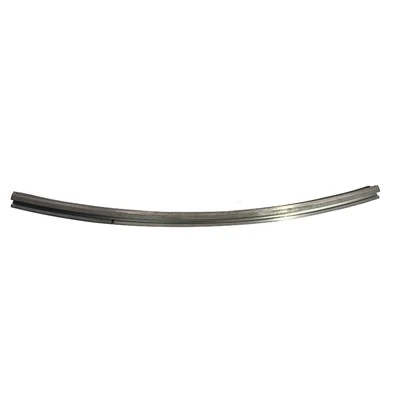
If you’re still second-guessing—whether you’re a small boiler operator, plant maintenance manager, or anyone stuck with a leaky ash blower—hit me up. I don’t do sales pitches, I ask you a few basic questions, shoot you a recommendation, and even help with fit checks if you send me specs. No pressure, no weird contracts, just getting you the seal that actually works for your blower.
Aircraft Engine Seal References:
- ASME Boiler and Pressure Vessel Code, Section II: Materials, Part C: Specification for Special Purpose Materials.
- Seal Design Handbook: A Guide to Rotary and Reciprocating Sealing Applications, 3rd Edition.
- Industrial Ash Handling Systems: Maintenance and Operation Best Practices, Power Engineering Society, 2021.
Jiangsu Turbine Electric Power Technology Co., Ltd.
As one of the most professional ash blower seal manufacturers and suppliers in China, we have world-leading production equipment and strong manufacturing capabilities. Please feel free to buy advanced ash blower seal for sale here and get pricelist from our factory. Customized orders are welcome.
Address: Building 8, Huaqi Yungu Xuzhou Lingang Industry Accelerator, Jiawang District, Xuzhou City, Jiangsu Province
E-mail: zjh800@163.com
WebSite: https://www.cnturbine.com/
