Hey there! As a supplier of Host Cell Residual DNA Detection Kits, I’m often asked about the detection range of these nifty tools. So, let’s dive right in and break it down for you. Host Cell Residual DNA Detection Kits

First off, what exactly is host cell residual DNA? Well, when we’re producing biopharmaceuticals, like monoclonal antibodies or recombinant proteins, we use host cells (like Chinese Hamster Ovary cells or Escherichia coli) to make these products. But after the production process, there’s bound to be some leftover DNA from those host cells in the final product. That’s what we call host cell residual DNA. And it’s important to detect and quantify it because it could potentially cause problems, like triggering immune responses in patients or even having potential oncogenic effects. That’s where our detection kits come in handy.
So, what’s the detection range of our Host Cell Residual DNA Detection Kits? The detection range can be quite broad, and it mainly depends on the type of assay and the technology used in the kit.
One common technology used in our kits is quantitative polymerase chain reaction (qPCR). qPCR is a super – sensitive technique that can detect and quantify DNA with high precision. With our qPCR – based kits, we can usually detect host cell residual DNA in the range of a few picograms to several nanograms per milliliter of sample. For example, if you’re dealing with a highly purified biopharmaceutical product, where the amount of residual DNA is expected to be very low, our kits can pick up as little as 10 picograms per milliliter. That’s like finding a tiny needle in a haystack!
On the other hand, if you’re in the earlier stages of the manufacturing process, where there might be more host cell debris and a higher amount of residual DNA, our kits can handle up to several nanograms per milliliter. This broad range is really useful because it allows you to monitor the residual DNA levels throughout the entire production process, from the initial cell culture all the way to the final purified product.
Another technology we use in some of our kits is digital PCR (dPCR). dPCR is even more sensitive than qPCR in some ways. It can partition the sample into thousands of tiny droplets, and each droplet either contains a DNA molecule or not. This allows for absolute quantification of the DNA without the need for a standard curve. With our dPCR – based kits, the detection range can be even more precise. We can detect host cell residual DNA down to single – molecule levels in some cases. That’s pretty amazing, right? This high – end sensitivity is perfect for applications where extremely low levels of residual DNA need to be detected, like in gene therapy products.
Now, let’s talk about why the detection range is so important. In the biopharmaceutical industry, there are strict regulatory requirements for the amount of host cell residual DNA in the final product. For example, the FDA and EMA have set limits on the amount of residual DNA that can be present in biopharmaceutical products. These limits are usually in the range of a few nanograms per dose. So, having a detection kit with a wide and accurate detection range is crucial to ensure that your product meets these regulatory standards.
If the detection range of your kit is too narrow, you might miss important information. For instance, if your kit can only detect DNA in the range of 100 picograms to 1 nanogram per milliliter, and your sample has 10 picograms per milliliter, you won’t be able to accurately quantify the residual DNA. This could lead to non – compliant products and potential regulatory issues.
On the other hand, if the detection range is too wide, you might get false – positive results. For example, if your kit is designed to detect DNA from a very broad range of host cells, it might pick up other DNA contaminants in the sample that are not actually host cell residual DNA. This can cause unnecessary re – testing and waste of time and resources.
When choosing a Host Cell Residual DNA Detection Kit, it’s also important to consider the specificity of the kit. Our kits are designed to be highly specific to the host cell DNA. For example, if you’re using CHO cells in your production process, our kit will specifically target and detect CHO cell DNA, without cross – reacting with other types of DNA in the sample. This specificity ensures that you’re getting accurate results and not being misled by other DNA contaminants.
We’ve also done a lot of validation studies on our kits to make sure that the detection range is reliable. We test our kits against a wide range of samples with known amounts of host cell residual DNA. This helps us to confirm that the kit can accurately detect and quantify DNA within the claimed detection range. And we keep improving our kits based on the latest research and technological advancements.
In addition to the detection range and specificity, our kits are also very easy to use. We provide clear instructions with detailed protocols, so even if you’re not an expert in molecular biology, you can still use our kits to get accurate results. And our customer support team is always there to help you if you have any questions or run into any problems.
So, if you’re in the biopharmaceutical industry and you’re looking for a reliable Host Cell Residual DNA Detection Kit, look no further. Our kits offer a broad and accurate detection range, high specificity, and ease of use. Whether you’re in the research and development stage or the large – scale manufacturing stage, our kits can help you ensure the safety and quality of your biopharmaceutical products.
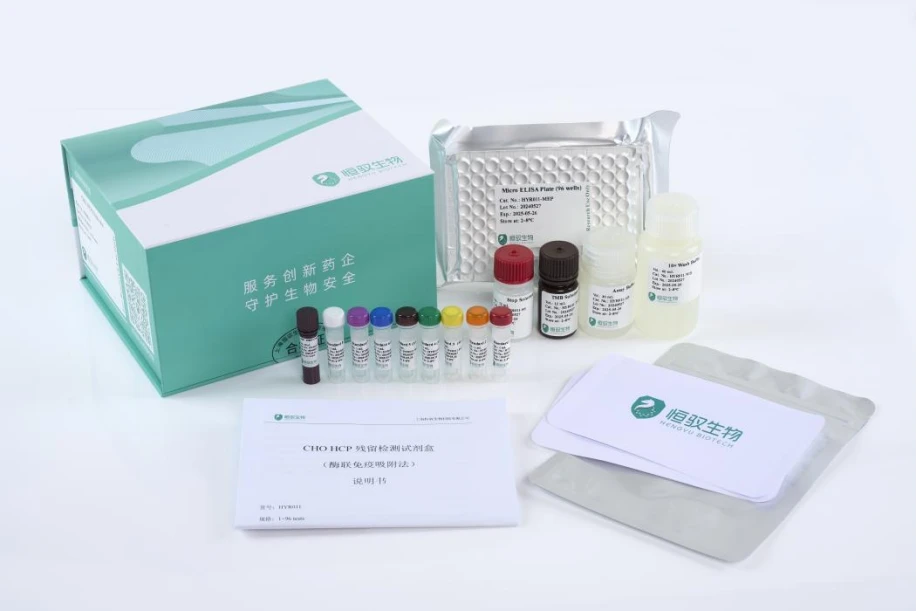
If you’re interested in learning more about our Host Cell Residual DNA Detection Kits, or if you want to discuss your specific needs and requirements, don’t hesitate to reach out. We’re more than happy to have a chat with you and help you find the best solution for your business.
Safety Detection Kits References
- European Medicines Agency (EMA). Guideline on the quality, non – clinical and clinical aspects of gene therapy medicinal products.
- U.S. Food and Drug Administration (FDA). Points to consider in the manufacture and testing of monoclonal antibody products for human use.
HyQure Biotech Co., Ltd.
As a professional host cell residual DNA detection kits enterprise in China and Switzerland, we rely on international compliance standards, leverages excellent quality and technical strength. If you have any enquiry about cooperation, please feel free to email us.
Address: Building 18, Lane 2777 East Jinxiu Road, Pudong New Area, Shanghai 2.Stücki Park Hochbergerstr. 60 I, 4057 Basel Switzerland
E-mail: service@hyqure.com
WebSite: https://www.hyqure.com/
