As a supplier of CoaXPress cables, I’ve witnessed firsthand the growing importance and widespread application of this high – speed data transmission technology in various industries, such as machine vision, industrial automation, and medical imaging. One of the key concepts in understanding the performance of CoaXPress cables is the eye diagram. In this blog, I’ll delve into what the eye diagram of CoaXPress cable is, its significance, and how it relates to the overall quality and functionality of the cable. CoaXPress Cable

Understanding the Basics of CoaXPress Cable
Before we jump into the eye diagram, let’s briefly review what CoaXPress cable is. CoaXPress is a high – speed serial communication standard designed for the transmission of large amounts of data over coaxial cables. It offers several advantages, including high bandwidth, long – distance transmission capabilities, and immunity to electromagnetic interference. These features make it an ideal choice for applications that require real – time data transfer, like high – resolution imaging systems that need to capture and process large volumes of image data quickly.
CoaXPress cables are typically used in a point – to – point configuration, connecting a camera or other data source to a controller or data acquisition system. The data is transmitted in a high – speed serial stream, which is where the eye diagram comes in handy for analyzing the signal quality.
What is an Eye Diagram?
An eye diagram is a graphical representation of a serial digital signal that has been repetitively sampled and overlaid on an oscilloscope screen. It gets its name from the resemblance to an open eye, and it provides a wealth of information about the quality of the signal being transmitted over the CoaXPress cable.
To create an eye diagram, the oscilloscope samples the signal at a high rate and then aligns the samples based on the clock signal. By overlaying multiple samples of the signal, the eye diagram shows the variations in the signal over time. The "openness" of the eye represents the maximum available time and voltage margins for the receiver to correctly detect the transmitted data.
Key Components of an Eye Diagram
- Eye Opening: The most prominent feature of an eye diagram is the eye opening. A wide and tall eye opening indicates that there is a large margin for the receiver to distinguish between a logic "0" and a logic "1". In other words, a larger eye opening means that the signal is more robust and less prone to bit errors. Conversely, a small or closed eye opening suggests that the signal is degraded, perhaps due to factors like noise, inter – symbol interference (ISI), or attenuation in the CoaXPress cable.
- Jitter: Jitter is the variation in the timing of the signal edges. In an eye diagram, jitter can be observed as the blurring or spreading of the eye’s edges. There are two main types of jitter: deterministic jitter, which is caused by factors like crosstalk and power supply noise, and random jitter, which is typically due to thermal noise. High levels of jitter can cause the receiver to misinterpret the data, leading to bit errors.
- Noise: Noise is the unwanted electrical signal that is added to the transmitted signal. In an eye diagram, noise can be seen as the random fluctuations in the signal level within the eye opening. Excessive noise can reduce the eye opening and increase the probability of bit errors.
Significance of the Eye Diagram for CoaXPress Cables
The eye diagram is a crucial tool for evaluating the performance of CoaXPress cables. Here’s why:
- Signal Integrity: By analyzing the eye diagram, we can quickly assess the signal integrity of the CoaXPress cable. A well – formed eye diagram with a large eye opening indicates that the cable is capable of transmitting data with a low bit – error rate. This is essential for applications where data accuracy is critical, such as in medical imaging or aerospace systems.
- Cable Quality: The eye diagram can also be used to detect cable defects or degradation. For example, if the eye diagram shows a significant reduction in the eye opening after a certain length of cable, it may indicate that the cable has excessive attenuation or impedance mismatches. This information can help us identify and replace faulty cables before they cause system failures.
- System Design: When designing a CoaXPress – based system, the eye diagram can be used to optimize the system parameters. For example, we can adjust the transmitter’s output voltage, the receiver’s sensitivity, or the equalization settings based on the eye diagram analysis. This ensures that the system operates at its best performance and meets the required data transfer rates.
Factors Affecting the Eye Diagram of CoaXPress Cables
Several factors can affect the appearance and quality of the eye diagram of CoaXPress cables:
- Cable Length: As the length of the CoaXPress cable increases, the signal attenuation also increases. This can cause the eye opening to shrink, reducing the signal margin and increasing the probability of bit errors. To mitigate this effect, we may need to use amplifiers or equalizers to boost the signal strength.
- Cable Quality: The quality of the CoaXPress cable itself plays a significant role in the eye diagram. Cables with poor insulation, improper shielding, or inconsistent impedance can introduce noise and signal distortion, resulting in a degraded eye diagram. As a CoaXPress cable supplier, we ensure that our cables are manufactured to the highest quality standards to minimize these issues.
- Environmental Conditions: Environmental factors such as temperature, humidity, and electromagnetic interference can also affect the eye diagram. Extreme temperatures can cause the cable’s electrical properties to change, while electromagnetic interference can introduce noise into the signal. We recommend using proper environmental protection measures, such as temperature – controlled enclosures and shielded cable routing, to minimize these effects.
How We Ensure High – Quality Eye Diagrams for Our CoaXPress Cables
At our company, we take several steps to ensure that our CoaXPress cables deliver excellent eye diagrams and reliable performance:
- Quality Manufacturing: We use high – quality materials and advanced manufacturing processes to produce our CoaXPress cables. Our cables are carefully designed to have consistent impedance, low attenuation, and excellent shielding properties. This helps to minimize signal distortion and ensure a large eye opening.
- Rigorous Testing: Before our CoaXPress cables are shipped to customers, they undergo rigorous testing using state – of – the – art equipment. We use eye diagram analysis as one of the key tests to evaluate the signal integrity of the cables. Only cables that meet our strict quality standards are released for sale.
- Technical Support: We provide comprehensive technical support to our customers. Our team of experts can help customers analyze the eye diagram of their CoaXPress cables, troubleshoot any issues, and optimize their systems for the best performance.
Conclusion and Call to Action
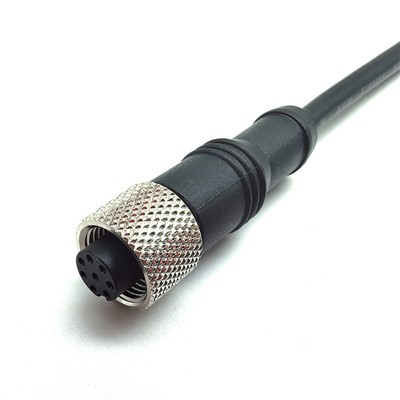
In conclusion, the eye diagram is a vital tool for understanding the performance of CoaXPress cables. It provides valuable insights into the signal integrity, cable quality, and system design. As a CoaXPress cable supplier, we are committed to providing high – quality cables that deliver excellent eye diagrams and reliable data transmission.
IEEE1394 Cable If you are looking for a reliable CoaXPress cable supplier for your machine vision, industrial automation, or medical imaging applications, we would be delighted to discuss your requirements. Our team of experts can help you select the right cable for your needs and ensure that you get the best performance from your CoaXPress system. Contact us today to start the procurement process and take your data transmission to the next level.
References
- "CoaXPress: A High – Speed Interface for Machine Vision", Machine Vision Handbook
- "Eye Diagram Analysis for High – Speed Serial Links", IEEE Transactions on Circuits and Systems
Karobert Technology LLC Karobert Trading PTE. LTD.
We’re known as one of the most professional coaxpress cable manufacturers and suppliers in China, also support customized service. Please feel free to buy high quality coaxpress cable made in China here from our factory. For price consultation, contact us.
Address: 6250 S 196th St, Kent, WA, 98055, USA.
E-mail: karl@karobert-us.com
WebSite: https://www.karobert-us.com/
