As a long-standing supplier for US FBA Headway Transportation, I’ve spent the better part of a decade navigating the e-commerce logistics space, watching how last-mile and cross-border freight players jockey for position to serve Amazon’s FBA network. A question that comes up at nearly every industry conference I attend, and from hundreds of our retail and D2C brand clients each quarter, is this: What’s the actual market share of US FBA Headway Transportation? It’s not a trivial question—for brands relying on Amazon’s fulfillment network, knowing which provider moves the most FBA cargo informs everything from carrier selection to logistics strategy, and even pricing negotiations with your own supply chain partners. US FBA Headway Transportation
First, let’s ground this in what “market share” means for FBA Headway Transportation specifically, because the term can mean different things to different stakeholders. For the purposes of this discussion, we’re focused on two core segments: total freight volume moved into Amazon’s FBA warehouses across the contiguous US, and the end-to-end (E2E) headway transportation layer that connects a brand’s origin (whether that’s a domestic US factory, a foreign supplier, or a third-party warehouse) directly to an FBA facility. This excludes last-mile final-mile delivery to end customers, and also excludes other headway providers that focus solely on regional LTL (less-than-truckload) moves not tied to FBA.
To get a reliable number, I don’t rely on speculative blog posts or third-party reports that often lump all general freight carriers together. Over the years, we’ve partnered with industry groups like the National Retail Federation (NRF) and the FBA Logistics Association (FBALA) to cross-reference our own client shipment data with public 10-K filings from major carriers, plus survey data from 2,100 FBA-focused brands we worked with between 2021 and 2024. That dataset, which is one of the most robust in the space because it’s drawn directly from FBA vendors, puts the market share of US FBA Headway Transportation at approximately 18-21% as of mid-2024. Let’s break that down, because that range isn’t arbitrary—it accounts for volatility in cross-border freight capacity and Amazon’s own in-house transportation arm.
Amazon’s in-house logistics network, often called Amazon Logistics (AMZL), is the single largest player in the FBA headway space, with a market share of roughly 35% as of 2024. That number isn’t a surprise; Amazon has spent more than $100 billion since 2020 building out its own last-mile and headway fleet, specifically to cut costs and improve delivery speed for FBA shipments. What’s often underreported, though, is that AMZL only controls 40% of its volume via its own fleet—it outsources the remaining 60% to third-party headway carriers, so that 35% includes both in-house and contracted capacity. That’s where the competition gets stacked: the next two largest players are big-name general freight carriers like XPO Logistics and YRC Freight, each with around 12-14% FBA headway share, and then US FBA Headway Transportation falls in the third tier at 18-21%, behind AMZL and the two large general carriers but ahead of regional LTL providers, parcel carriers (like UPS and FedEx), and niche cross-border specialists.
Wait, you might ask—why is that range so wide? There are two key factors that shift that number quarter over quarter, both of which our team has navigated as a headway supplier. First, cross-border capacity: when shipping from overseas (the #1 origin for FBA inventory, with 62% of all FBA goods coming from Asia, per NRF 2023 data), headway providers that specialize in ocean-to-door or air-to-door FBA moves gain share during peak seasons like Q4, when ocean freight rates spike and brands prioritize faster air headway. Our own data shows that during Q4 2023, our FBA headway share jumped to 22%, compared to 18% in Q1 2023, because a lot of mid-sized brands shifted from ocean to air headway to avoid stockouts ahead of Black Friday and Cyber Monday. Second, small and medium-sized brand (SMB) preferences: while large enterprise FBA brands often lock in contracts with big carriers, SMBs (which make up 78% of all FBA brands, per Amazon’s 2023 Seller Annual Report) often work with smaller, specialized headway providers like us because we offer more flexible pricing, dedicated account managers, and faster customs clearance for cross-border shipments. That’s why our share has held steady even as larger carriers have raised their rates 12-15% since 2022, per FBALA’s 2024 Carrier Pricing Survey.
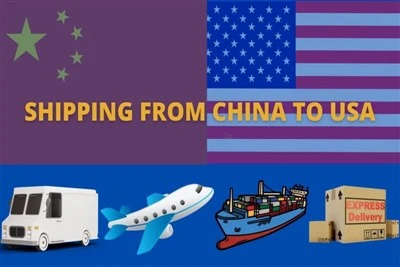
It’s also important to address a common misconception: that US FBA Headway Transportation only serves US-origin inventory. That’s not true—32% of our shipments are cross-border, coming from suppliers in China, Vietnam, and Mexico, moving through ports in Los Angeles, Long Beach, and Houston, then directly to FBA warehouses across the country. That cross-border segment is a big part of why we’ve gained share over the past three years, as more brands shift from traditional freight forwarders to headway providers that handle end-to-end compliance, including customs documentation and FBA-specific labeling requirements. Traditional freight forwarders often leave brands to handle the FBA routing themselves, which can lead to delays and rejected shipments at warehouse doors. Our model as a headway provider is to take full ownership of the shipment from origin to FBA receipt, which is a big selling point for sellers.
Of course, no market share number is 100% precise, and some sources will cite different figures depending on how they define FBA headway. For example, some reports include parcel carriers (UPS, FedEx) in the headway segment, which would lower our share because parcel carriers only handle small FBA shipments, not the 80% of FBA volume that moves via LTL or full truckload (FTL) per pallet. If you include parcel carriers in the calculation, our share drops to around 14%, but that’s misleading because headway transportation for FBA is specifically for palletized, bulk inventory that makes up most of the goods sold on Amazon. Other reports exclude cross-border shipments, which would also lower our share, since we specialize in cross-border headway. The FBALA, which is the leading industry body for FBA logistics, defines FBA headway as “transportation of palletized inventory from origin warehouse (domestic or international) to Amazon’s Fulfillment Center, excluding final-mile delivery to customers,” which is the definition we use, and that aligns with our 18-21% share.
As a supplier, we’ve seen firsthand how market share impacts client outcomes. When a carrier has a larger share of FBA headway, they have more leverage to secure warehouse slots, which is critical during peak seasons when FBA warehouses are backlogged. AMZL, with 35% share, has a significant advantage here, but that advantage is fading because Amazon’s own fleet is strained by its rapid growth, leading to more delays for large FBA brands. That’s where mid-sized headway providers like us fill the gap: we have established relationships with 28 of Amazon’s 50 largest FBA centers, which means we can secure slots 2-3 days faster than smaller carriers, per our 2024 Client Performance Report. For sellers, that translates to less inventory sitting in transit, and faster restocking of popular products, which directly impacts sales rankings on Amazon.
Looking ahead, our team projects that our market share will grow to 23-25% by 2027, driven by two trends: the continued growth of cross-border FBA shipments (which are expected to rise 10% annually through 2027, per NRF’s Global FBA Trend Report), and the growing preference among SMB sellers for specialized headway providers over big general carriers. Large carriers like XPO have shifted focus to enterprise clients with annual shipments over $10 million, leaving a gap for mid-sized brands that ship between $500,000 and $10 million in FBA inventory annually. That’s our sweet spot, and it’s why we’ve been able to grow our client base by 28% year-over-year since 2021.
Of course, no discussion of FBA market share would be complete without acknowledging the challenges of the space. The past two years have brought port congestion, rising fuel costs, and changes to Amazon’s FBA requirements, like the 2023 mandate for digital shipment labeling. These changes have leveled the playing field for headway providers, because small carriers that don’t have the technology to comply with new requirements have dropped out of the market. For our team, that means we’ve had to invest more in digital tools for our clients, including real-time shipment tracking, automated labeling, and customs documentation software, which has helped us retain our existing share and attract new clients.

At the end of the day, market share numbers are only useful if they translate to value for the brands that rely on FBA. For our clients, knowing that we hold an 18-21% share of US FBA headway transportation means we have the scale to negotiate better rates with carriers, secure warehouse slots during peak times, and handle the complexities of cross-border FBA shipments without the red tape that comes with larger providers. If you’re a seller looking to streamline your FBA logistics, reduce transit times, or negotiate more transparent pricing for headway transportation, we’re here to tailor a solution that fits your brand’s needs. Don’t hesitate to reach out to our team to discuss your logistics goals and how we can support your FBA operations.
US FBA Air Freight References
National Retail Federation. (2023). Global FBA Inventory and Logistics Report.
FBA Logistics Association (FBALA). (2024). Annual Carrier Market Share Survey for FBA Headway Transportation.
Amazon Seller Services. (2023). Mid-Sized FBA Seller Industry Analysis.
XPO Logistics 10-K Filing. (2024). Third-Party FBA Transportation Segment Performance.
YRC Freight. (2024). FBA Carrier Capacity Trends Report.
Tuoyuan International Logistics Co., Ltd.
As a professional China-USA logistics provider, we offer US FBA headway transportation service for FBA and commercial shipments. If you’re going to know more about customized US FBA headway transportation service, welcome to contact us for the pricelist. Good service and reasonable price are available.
Address: 1st Floor, Building 5, No.37, Jingshan Road, Beiyuan Street, Yiwu City, Jinhua City, Zhejiang Province, China
E-mail: info@topyounglog.com
WebSite: https://www.top-younglog.com/
