If you’ve ever stood in a grocery aisle staring at a pile of cardboard moving boxes, a stack of unbleached paper shopping bags, or a roll of toilet paper and wondered where all that stuff comes from beyond the factory, let me tell you: as a paper products supplier, I think about energy requirements for production every single day. It’s not just a box-ticking manufacturing detail—it’s the backbone of every order we send out, the reason we adjust our processes on cold winter mornings when utility rates spike, and something we’ve had to get smarter about over the past decade to keep costs down and our environmental footprint small. Paper Products

A lot of people assume paper is a “natural” product so it must be low-energy to make, right? Wrong. Turning logs, recycled fiber, or pulp into something you can hold, ship, or wrap in requires massive amounts of energy, split across every single step of the process—from harvesting the raw material to getting the finished product stacked and ready to load onto a truck. Let’s break this down, step by step, because that’s the only way to understand exactly how much power goes into every roll, every box, and every bag.
First, let’s start with the raw material source, because that’s where the energy calculation starts, not when the fiber hits our factory floor. There are two main feedstocks for paper: virgin wood pulp and recycled paper fiber, and each has very different energy requirements. Virgin pulp comes from either softwood or hardwood trees, harvested from sustainable forestry operations. Even getting that tree out of the woods takes energy: heavy machinery to fell it, trucks to haul it to a processing mill—usually 100 to 300 miles away, depending on where the trees grow. Once at the pulp mill, the real energy use begins. Making virgin pulp requires separating cellulose fibers from lignin, the tough structural stuff that holds trees together. The dominant process here is the kraft pulping method, which uses a chemical cook (sodium hydroxide and sodium sulfide) to break down lignin. That cook takes place in giant pressure vessels called digesters, heated to 170 to 180 degrees Celsius, which uses a lot of steam—most of that steam comes from burning wood waste from the milling process, like bark, branches, and sawdust, but if there’s not enough waste to power the mill, they have to buy natural gas or coal to make up the difference.
Recycled fiber, on the other hand, has a lower upfront energy cost, right? That’s a common selling point for paper products made from post-consumer waste, and it’s true—sorting, pulping, and processing recycled paper uses about 40% less energy than virgin pulp. But it’s not zero. Recycled paper comes with contaminants: plastic liners, food residue, glue, even staples. Processing that requires extra steps: deinking agents to remove ink, washing to get rid of food grease, and screening to pull out the plastic bits. Those steps still use steam and water, so energy use is just lower, not non-existent. As a supplier, I make sure our customers know that recycled paper saves energy, but it’s important to be honest about the work that goes into it—it’s not just “trash turned into product.”
Now, once the pulp (virgin or recycled) is delivered to our paper product factory, that’s where most of the energy for actual product production happens. The biggest single use here is in the paper machine itself, that giant 100+ foot long machine that turns wet pulp slurry into a continuous roll of paper. Let’s walk through how that works: first, the pulp is diluted with water to a very thin slurry, only about 0.5% solid fiber. That slurry is spread evenly onto a moving wire mesh, and gravity and vacuum suction pull most of the water out— that’s the forming section, uses some electricity for the vacuum pumps. Then, the wet sheet moves through press rolls that squeeze out more water, which uses even more energy for those heavy rollers. But the biggest energy hog is the drying section, made up of dozens of large steam-heated cylinders that heat the paper sheet to evaporate the remaining water. That’s where 60 to 70% of the total energy for paper product production comes from, every time. Depending on the type of paper we’re making, drying can take anywhere from a few minutes to 20 minutes, and every ton of paper made requires about 2 to 3 tons of steam for drying alone. For context, a standard corrugated cardboard box that weighs about 5 pounds uses roughly 15 kWh of energy just to dry during the papermaking process. That’s more energy than the average American fridge uses in an hour.
After the paper is dried into a big roll, we cut it, print on it (if needed), convert it into the finished product, like boxes, bags, or tissue, and package it for shipping. That step uses energy too: cutters, printers, bag-making machines, box-folding equipment, all run on electricity. Printing, especially if we use offset printing for custom order work, adds a bit of extra heat and energy for the drying ink. For smaller products like paper napkins or facial tissue, we have extra processes: embossing, folding, and packing, all of which require small motors and sometimes heat for gluing or sealing.
Wait, there’s another big part of energy requirements I haven’t mentioned yet: transportation. Once the product is finished, getting it from our factory to the customer’s warehouse or retail space adds to the total energy footprint, though that’s often lumped into logistics rather than production. But as a supplier, I track this too because it directly impacts the total cost for my customers.
Now, let’s get specific with numbers, because that’s what really drives home how much energy we’re talking about. The American Forest & Paper Association, one of the leading industry groups for sustainable paper production, says that the average total energy use for producing one ton of paper products in North America is around 20 to 25 MMBtu (million British thermal units). To put that in terms of electricity, that’s about 5,860 to 7,300 kWh per ton. For context, the average U.S. home uses about 900 kWh per month, so one ton of paper uses as much electricity as a home uses for 6.5 to 8 months. For specific products, those numbers shift: a ton of corrugated cardboard uses about 18 to 20 MMBtu, while a ton of tissue paper, which is thinner and requires more careful drying, uses closer to 25 to 28 MMBtu. Recycled paper products come in lower, around 12 to 15 MMBtu per ton, which is where the biggest energy savings happen.
I’ve been in this industry for 12 years, and one of the biggest changes I’ve seen in that time is how we’ve reduced energy requirements, not just because of cost, but because customers are increasingly asking for more sustainable products. Ten years ago, we’d burn natural gas for all our drying steam, no questions asked. Now, we generate about 40% of our own steam from wood waste (the same bark and sawdust I mentioned earlier from virgin pulp processing) and we’ve installed energy-efficient motors on all our paper machines, cutting our electricity use by 22% over the past seven years. We also switched to LED lighting across the factory a few years ago, which sounds small but adds up to thousands of dollars in savings and reduces our overall energy draw.
But it’s not just about efficiency—sometimes energy requirements shift because of external factors. A few years ago, when natural gas prices spiked during the winter, our energy costs went up 35% in six months, and we had to adjust production schedules to run during off-peak electricity hours to save money. That’s a reality of being a paper products supplier: energy is one of our biggest variable costs, right after raw materials and labor. So understanding the exact energy needs of every product we make isn’t just an environmental thing—it’s a business thing, because if we can’t keep our energy costs low, we can’t pass on fair pricing to our customers.
I also get a lot of questions from customers about the difference between “energy used to make paper” and “embedded energy,” which is the total energy that goes into every step, from raw material to finished product. Embedded energy is a big deal for businesses that do carbon accounting, because customers are required to report the carbon footprint of their products. That’s why I provide detailed energy data for every order we process, so my customers can accurately calculate their own sustainability goals. For example, if a retail brand is launching a new line of eco-friendly packaging, they’ll ask if we can source 100% recycled cardboard and share the exact embedded energy for that product, so they can market it to their own customers as low-carbon.
There are also common misconceptions I run into all the time. A lot of people think that “tree-free paper” is more energy-efficient, but that’s not always true. Tree-free paper, made from hemp, bamboo, or agricultural waste like wheat straw, does have its benefits, but energy use varies a lot. Hemp requires processing that uses a lot of water and energy, and bamboo pulp can be just as energy-intensive as softwood pulp if processed in a standard paper mill. The only thing that’s consistent is that recycled fiber is almost always lower in embedded energy than any virgin fiber source, no matter what the raw material is.
As a supplier, I also have to stay on top of new technologies that can reduce energy requirements even more. Right now, there’s a lot of talk about advanced pulping methods that use less steam, and paper machines that use less water and energy for drying. We’re testing a new deinking process for recycled paper that cuts water use by 30% and reduces the amount of steam needed for washing, which should lower our energy costs even more next year. We’ve also invested in solar panels on the roof of our factory, which now power about 15% of our electricity needs during the day, when we run the most equipment.
But here’s the thing: energy requirements for paper product production are going to keep evolving, both because of technology and because of customer demand for more sustainable products. Ten years ago, the only question customers asked was “how much does this cost?” Now, they’re asking “how much energy did this product take to make?” “How much carbon did it emit?” and “can you lower that energy use even more to help me hit my sustainability targets?” That’s a shift I’m glad to see, because it means we’re all working to make an industry that was once seen as high-energy and low-sustainability, a lot better.
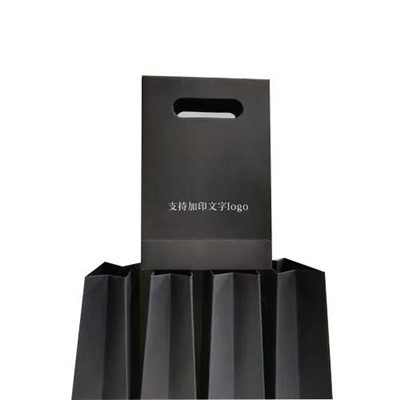
If you’re a business owner, a logistics manager, or a procurement officer looking for a paper products supplier that’s transparent about energy use, that has a track record of reducing its carbon footprint, and can provide custom paper products tailored to your needs, I’m here to help. We offer corrugated boxes, custom packaging, paper shopping bags, tissue, and more, all with clear, verifiable data on energy use and embedded carbon for every order. Whether you need a small batch of custom boxes for a local event or a steady supply of packaging for a national retail brand, we can work with you to find a product that fits your needs and your sustainability goals. Reach out to our team to talk through your requirements, and let’s build a partnership that works for both your business and the planet.
Pet Products References
American Forest & Paper Association. (2022). Energy Use in Pulp and Paper Manufacturing.
U.S. Environmental Protection Agency. (2023). Recycled Paper Production Energy Savings.
Paper Industry Technical Association. (2021). Modern Energy Efficiency in Paper Converting Operations.
Sustainable Packaging Coalition. (2022). Embedded Energy Calculations for Paper Products.
Rugao City Printing Co., Ltd.
As one of the most experienced paper products manufacturers and suppliers in China, we also support customized service. Please feel free to wholesale bulk high quality paper products for sale here from our factory. For quotation, contact us now.
Address: No. 259, Liyu Road, Rugao City, Jiangsu Province
E-mail: rgsycxp@163.com
WebSite: https://www.rugaoprinting.com/
