Let me cut to the chase right off the bat: when you’re hunting for custom parts that have to fit exactly, no slop, no variance, when you need components that can handle high pressure, extreme temperatures, or repetitive use without failing—yes, machining services do offer precision machining. But that “yes” isn’t a one-size-fits-all promise. It’s rooted in the machines we use, the processes we follow, the quality checks we run, and the experience of a team that’s spent decades not just running tools, but understanding what precision actually means for your project. I’ve been on this end of machining for 18 years, so let me walk you through how we deliver that precision, where it comes from, and why it matters more than just a label of “high tolerance.” Machining Services
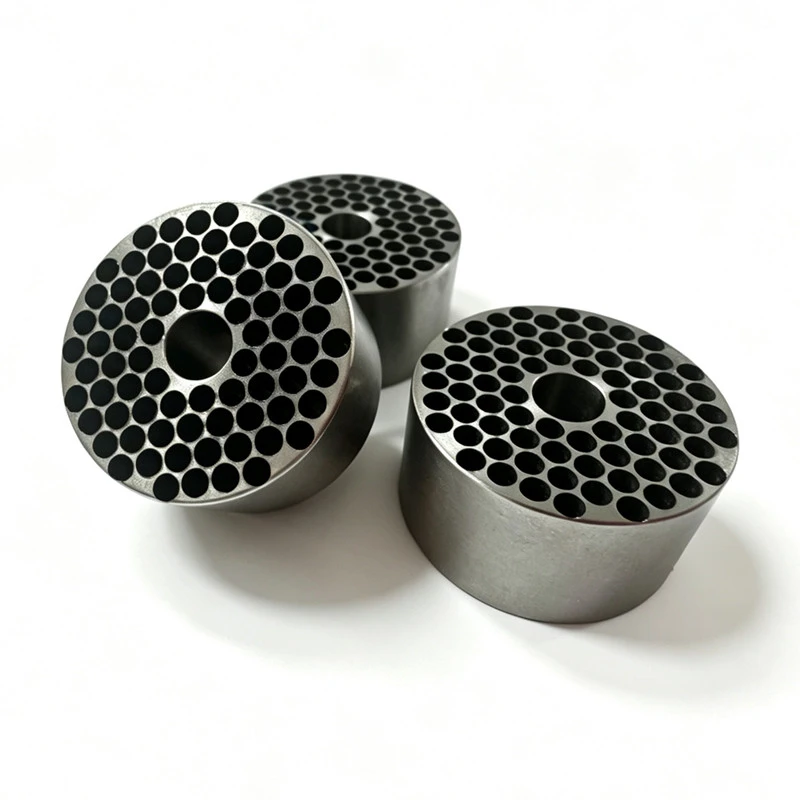
First, let’s get one thing straight: precision machining isn’t just about cranking out parts with tiny measurements. It’s about consistency. If you’re making 1,000 brackets for a medical device, each one has to sit within ±0.001 inches of the spec, every single time. If one is off by 0.002, that’s a part that can’t be used, and for medical equipment, that’s a risk no one can take. When we started our machining services company back in 2005, we built our shop around that core belief—precision isn’t a feature, it’s the foundation. But how do we pull that off, especially when so many “machining services” out there claim the same?
Let’s talk about the tools. Ten years ago, a lot of precision work was done on manual mills and lathes, where operators used indicators and dials to dial in measurements. That works for small runs, and it still has a place, but for tight, repeatable tolerance work, computer numerical control (CNC) machines are where the magic happens. We run 12 CNC mills and 8 CNC lathes, all calibrated every single week, not just when the quality manager remembers. Last year, we upgraded half our fleet to 5-axis CNC machines, which can cut a part from five different angles without needing to reposition it—eliminating the tiny errors that come with clamping a part down, moving it, and reclamping it. For example, when we made titanium turbine blades for a small aerospace client last year, the 5-axis machines let us machine the complex aerodynamic curve of the blade in one pass, keeping the tolerance on the edge radius within ±0.0005 inches. That’s so small you can barely see it with the naked eye, but it’s the difference between a blade that burns fuel efficiently and one that wastes 15% more energy.
But machines are only as good as the operators running them, right? I’ve got three lead machinists on staff who’ve been with me for 12+ years. They don’t just push buttons—they know how a material will act when it’s being cut. Aluminum, for example, can have built-in “dead spots” that cause a tool to wander if you don’t adjust the feed rate or speed. Stainless steel work-hardens, so if you cut too slow, the edge gets harder and the tool can leave a rough finish. Our guys don’t just follow the G-code sent from a design team—they tweak it in real time, based on what the part is telling them. That’s where a lot of new machining services drop the ball: they hire operators who only know how to run pre-written programs, no problem-solving. If a part warps during machining (which happens more than you think, especially with thin aluminum), they don’t know how to adjust the process. Our team caught that on a run of 500 thin-walled aluminum brackets for a robotics client last quarter—one bracket was warping 0.003 inches after machining, so they slowed the spindle speed by 100 RPM and added a cooling spray that targeted the part’s hot spots, bringing that variance down to almost zero. No extra cost to the client, no delay—just experience turning a problem into a solution.
Now, let’s get into the metrics, because precision isn’t a feeling—it’s numbers. When we take a job, the first thing we do is sit down with the client’s engineering team and break down their tolerance requirements. A lot of clients will say “±0.002 inches,” but we push them: is that for a hole’s diameter, or the position of that hole relative to another feature? Is the surface finish critical? For a hydraulic component, a rough surface inside a bore can cause leaks over time, so we need a finish of Ra 1.6 or lower. For a decorative component, maybe Ra 32 is fine, but they don’t always say that up front. We use coordinate measuring machines (CMMs) for final inspections, which can scan an entire part, compare every feature to the CAD model, and flag any deviation within 0.0001 inches. We also use digital calipers and micrometers for in-process checks, so we catch errors before a whole run is ruined. Last year, a defense client sent us a batch of custom bolts for a missile guidance system—they needed the bolt’s thread pitch to be exact, and their in-house inspection machine was picking up a tiny variance. Our CMM found that a single tool had a tiny nick, which was causing the threads to be off by 0.0008 inches. We replaced the tool, reran the whole batch, and delivered on time. The client later told us that part was for a prototype that was being tested for $1.2 million total—we didn’t mess that up, because we check every single part that leaves our shop.
But wait—what about low-cost machining services that advertise “precision machining” for half the price? Yeah, I know them. I’ve lost bids to them before, back in the early days, and I’ve won bids back when clients saw the difference. Most of those services use older machines, run long production runs without stopping for calibration, and do final inspections with basic calipers that are only accurate to 0.001 inches. They cut corners on material too—maybe they’ll use a lower-grade aluminum that warps easier, or a tool that doesn’t hold an edge as long. For a part that doesn’t have high performance requirements, that’s fine. But if you need a part that has to meet ISO or AS9100 standards (the quality management systems for aerospace and defense), those services can’t do it. We’re ISO 9001 and AS9100 certified, and every process we follow is documented—from machine calibration logs, to operator checks, to inspection reports. That documentation is just as important as the part itself, because if a part fails in the field, you need to be able to trace every step of how it was made.
That said, precision machining isn’t for every project. If you need 10,000 simple steel brackets for a bookshelf, high-precision machining would be overkill, and way too expensive. But when it comes to parts where performance and reliability matter—aerospace, medical, robotics, automotive, oil and gas, even consumer electronics—precision machining isn’t a luxury, it’s a requirement. A pacemaker’s internal components have to be machined to tight tolerances to work safely. A robot arm’s joints need to fit exactly to move smoothly and last for years. A wind turbine’s gear parts have to be precise to handle 20 ton loads without breaking. We’ve made parts for all of those industries, and every time, the precision is non-negotiable.
Let me give you a real example, something we did last year for a small medical device startup. They were designing a new surgical tool that required a tiny titanium insertion tip. The spec was for the tip’s outer diameter to be 0.125 inches, with a tolerance of ±0.0002 inches, and a surface finish so smooth that it wouldn’t irritate tissue during use. The startup’s previous machining service couldn’t hit that tolerance—their parts were coming in at ±0.001 inches, which meant the tip either was too loose and wiggled inside the body, or too tight and didn’t slide in properly. They found us through a referral, and when we looked at their CAD file, we realized their original tool path would have caused the tip to vibrate, leading to the inconsistency. Our machinists adjusted the tool path to use a smaller, sharper end mill, slowed the feed rate, and used a flood coolant system to reduce heat. We ran a test batch of 50 parts, checked each one with a CMM, and every single tip was within ±0.0001 inches—half the required tolerance. The startup ended up using us for all their prototypes and production runs, and that tool is now being used in hospitals across the country. That’s the kind of impact precision machining has, and that’s what our team delivers every day.
Now, I know a lot of clients are worried about lead times too. They think precision machining has to take forever, like you have to wait 8 weeks just to get a quote. No, we don’t do that. We respond to quote requests within 24 hours, even for complex parts, because we know when a client needs a prototype fast, they can’t wait. We also have a 1-week rush service for prototype parts, because we’ve calibrated our process to move quickly without cutting corners on quality. That balance—speed and precision—is what sets us apart from a lot of other machining services.
At the end of the day, the question “Do machining services offer precision machining?” doesn’t have a yes/no answer. It’s “Which machining services offer precision machining?” Because it’s not just about having a CNC machine or a CMM. It’s about a team that knows how to use those tools, follows strict quality standards, and cares enough about your project to check every step. We don’t just machine parts—we deliver solutions that work, that fit exactly, that perform as you designed them.
If you’ve got a project where precision matters, whether it’s a prototype, a small production run, or a large order, let’s talk. I’d be happy to walk you through our process, show you examples of parts we’ve made, or even answer any questions you have about tolerance, materials, or lead times. We can work with any design, any specification, and make sure every part that leaves our shop meets your exact needs.
SLS Printing Reference
- AS9100 Revision D, Aerospace Quality Management System Requirements
- ISO 9001:2015, Quality Management Systems — Requirements
- Campbell, J. (2021). Precision Machining Fundamentals: Tools, Processes, and Quality Control. Industrial Press.
- DeGarmo, E. P., Black, J. T., & Kohser, R. A. (2020). Materials and Processes in Manufacturing (13th ed.). Wiley.
Dongguan Xinchuan Precision Manufacturing Co., Ltd.
As one of the most professional machining services manufacturers and suppliers in China, we offer a quick lead time for customized orders. Please feel free to buy precision machining services made in China here from our factory. Contact us for quotation.
Address: #16 Gangjian Road, Changping Town, Dongguan City, Guangdong, China. 523000
E-mail: FreeQuote@xcprecision.com
WebSite: https://www.xcprecisions.com/
