When I get asked “Can industrial rubber sheets be used in hydraulic systems?” at trade shows, over email, or on the phone by plant managers, maintenance leads, and small business owners building new equipment, my answer never comes straight away. I don’t just say yes or no—because for over 12 years as an industrial rubber sheet supplier, I’ve seen too many projects go sideways when someone grabs a random sheet off a shelf instead of matching the material to the job. Hydraulic systems aren’t just hoses and pumps. They’re the quiet backbone of everything from farm tractors to construction cranes to factory assembly lines, and every part that touches the hydraulic fluid has to hold up to pressure, heat, and that fluid itself. That’s where industrial rubber sheets come in, but only if you pick the right kind. Let me break this down the way I’ve learned works best, straight from the work floor and the phones I answer every day. Industrial Rubber Sheet
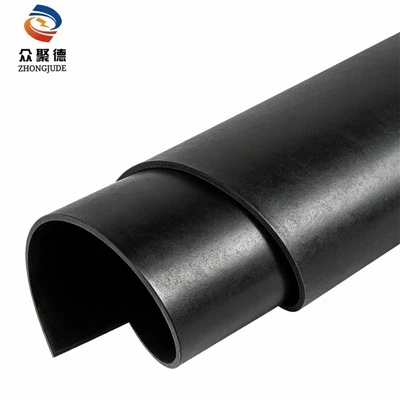
First, let’s talk about what hydraulic systems actually demand of the parts inside them. Most hydraulic fluid is petroleum-based, some are synthetic, and a small number are water-glycol mixes, depending on the application. The system runs at pressures that range from a few hundred psi for small lift gates all the way up to 5,000 psi or higher for heavy construction equipment. Then there’s temperature: those systems can sit out in -20°F winter cold or run hot enough to push rubber past its breaking point, sometimes 200°F or more. And it’s not just pressure and temperature—there’s flex, too. Parts like gaskets, valve seals, reservoir liners, and even protective covers for hydraulic lines move and bend constantly, so the rubber can’t crack or tear after a few months of use.
Now, what makes an industrial rubber sheet different from the rubber bands or the weatherstripping on your old car door? Most industrial rubber sheets are custom formulated for specific environments, and not all of them are suited for hydraulic work. Let’s start with the most common type: nitrile rubber, or NBR. This is the workhorse of hydraulic systems, full stop. I’ve been recommending nitrile sheets for hydraulic gaskets, valve seals, and reservoir liners since I first started in this business back in 2011, and I still stand by it. Nitrile is resistant to both petroleum-based hydraulic fluids and moderate temperatures—usually between -40°F and 212°F, which covers 90% of the hydraulic systems our customers work with. It’s flexible, it’s durable, and it stands up to the kind of constant pressure and flex that parts in hydraulic systems go through. Last year, a customer building cherry pickers for a tree service came to us with a problem: their old gaskets were cracking after six months, leading to slow leaks and downtime that cost them hundreds of dollars a week. We sent them a 1/8-inch thick nitrile sheet, they cut their own gaskets, and six months later they called to say they hadn’t had a single leak. That’s the kind of win I live for.
But nitrile isn’t the only option, and it isn’t always the right one. What if someone is working with synthetic hydraulic fluids, like those used in extreme cold or high-heat applications? That’s where ethylene propylene diene monomer (EPDM) rubber comes in. EPDM is resistant to many synthetic fluids and holds up better than nitrile in hot conditions, sometimes up to 300°F, though it’s not as good with petroleum-based fluids. We had a customer a couple years ago in upstate New York who works on hydraulic systems for snow plows and road graders. Their old nitrile gaskets were failing in the -30°F temperatures we get some winters, because nitrile gets stiff and brittle at those extremes. We sent them EPDM sheets, and they reported the seals stayed flexible even in the coldest blizzards, and didn’t break down when they ran the plows in the -100°F wind chill. That’s the kind of scenario where matching the rubber to the exact working conditions matters.
Then there’s neoprene, another common industrial rubber sheet, which is a middle ground of sorts. Neoprene is resistant to both petroleum fluids and moderate heat, and it’s more flexible than nitrile in some cold conditions, though it doesn’t hold up as well as EPDM in extreme heat. We recommend neoprene for hydraulic covers and protective sleeves more often than for gaskets or seals, since those parts don’t touch the fluid directly but still need to stand up to oil splatters and the temperature around the system. One of our regular customers runs a metal stamping factory, and they use neoprene sheets to cover their hydraulic line connections to keep oil from dripping onto the floor and creating slip hazards. It’s worked for them for years, and it’s a good example of how industrial rubber sheets can be used for multiple parts of a hydraulic system, not just the seals.
Now, here’s the part that most people get wrong: not every industrial rubber sheet is suitable for hydraulic systems, and using the wrong one can lead to big problems. For example, natural rubber—yes, that’s a type of rubber sheet people use for all sorts of general work—breaks down almost instantly when exposed to petroleum-based hydraulic fluid. We had a customer a few years ago who tried to save money by using cheap natural rubber gaskets for a small hydraulic lift in his repair shop. A week later, the gaskets swelled up, leaked all over his floor, and caused the lift to stop working for three days. He ended up paying more for emergency repairs than he would have for good nitrile sheets in the first place. Then there’s silicone rubber, which is heat-resistant but not at all resistant to petroleum fluids. I’ve had a few customers come to us after trying silicone for hydraulic parts, and they always end up coming back once they realize it’s not designed for that kind of fluid exposure.
Beyond the type of rubber, there are other factors to consider when choosing an industrial rubber sheet for a hydraulic system. First, the thickness. For gaskets, you want a sheet that’s thick enough to create a tight seal when compressed, but not so thick that it’s hard to fit. Most hydraulic gaskets work best with sheets between 1/16 and 1/4 inch thick, depending on the pressure of the system. For reservoir liners, a thicker sheet, like 1/8 or 3/16 inch, is better because it has to stand up to being filled and emptied, and absorb any minor impacts. Then there’s the durometer, which is the measure of how hard or soft the rubber is. For hydraulic seals, you want a durometer of around 70 on the Shore A scale—soft enough to flex and create a seal, but hard enough to hold up to constant pressure. If you go too soft, the seal will wear out quickly; too hard, and it won’t flex enough to create a tight seal.
I also always tell customers to ask about the rubber’s compression set. That’s the ability of the rubber to go back to its original shape after being compressed, which is critical for seals and gaskets that need to stay tight for long periods of time. A good industrial rubber sheet for hydraulic systems should have a compression set of less than 20% after 24 hours at 150°F. If it’s higher than that, it will stay compressed after time, leading to leaks. That’s why it’s so important to buy industrial rubber sheets from a reputable supplier, not just a general hardware store or a cheap online marketplace. The cheap sheets might cut the cost upfront, but they don’t have the consistent formulations or testing that you need for hydraulic work.
Another thing I see a lot is customers asking if they can customize the sheets themselves, like cutting their own gaskets or seals. The short answer is yes, most of the time. Industrial rubber sheets come in standard sizes, like 36×36 inch or 48×48 inch, so they’re easy to cut with a utility knife, a die cutter, or even a punch press. We even have customers who buy full sheets and cut their own custom parts in-house, which saves them time and money compared to buying pre-made seals. That’s one of the big advantages of using sheets instead of pre-made parts: the flexibility to adapt to whatever size or shape you need, especially if you’re building a custom hydraulic system or have an old one that’s hard to find replacement parts for.
But there are limitations, of course. If you’re working with a high-pressure system, like over 3,000 psi, you might need a rubber sheet that’s reinforced with fabric or metal, to give it extra strength and prevent it from stretching or blowing out. We carry reinforced nitrile sheets for exactly that kind of application, and they’re used for things like high-pressure reservoir liners and hose reinforcements. Regular, non-reinforced sheets work fine for low to medium pressure systems, but for heavy-duty work, reinforcement is non-negotiable.
I’d also be remiss if I didn’t mention the maintenance side of things. Even the best industrial rubber sheet for hydraulic systems won’t last forever if you don’t take care of it. Regularly checking for leaks, replacing seals when they start to crack or harden, and using the right type of hydraulic fluid for your system can extend the life of your rubber parts by years. We have a lot of customers who have been using the same type of nitrile sheets from us for over a decade, as long as they stay on top of maintenance.
At the end of the day, the question “Can industrial rubber sheets be used in hydraulic systems?” has a very practical answer: yes, but only if you pick the right type, the right thickness, and the right formulation for your specific application. It’s not a one-size-fits-all answer, and that’s what makes my job as an industrial rubber sheet supplier so rewarding. I don’t just sell sheets—I help customers avoid downtime, save money on repairs, and keep their operations running smoothly.

If you’re working on a hydraulic project, whether it’s a new build, a repair, or an upgrade, and you’re not sure what type of industrial rubber sheet you need, don’t guess. Reach out, tell me about your application, the pressure, the type of fluid you’re using, the temperature range, and what parts you need to build or repair. I can help you pick the right material, the right thickness, and give you advice on cutting and installation that will keep your system working for years. Stop wasting money on cheap, wrong materials that lead to leaks and downtime—let’s talk about getting the right industrial rubber sheets for your hydraulic system.
Silicone Rubber Mat References
- Ohm, R. F. (2006). Rubber Compounding: Chemistry and Applications. Marcel Dekker.
- Morton, M. (1987). Rubber Technology and Manufacture. Hanser Publishers.
- Hydraulic Fluid Compatibility Guide. National Fluid Power Association.
- ASTM D2000, Standard Classification System for Rubber Products in Automotive Applications. ASTM International.
Hebei Zhongjude Power Technology Co., Ltd.
With abundant experience, we are one of the most reliable industrial rubber sheet manufacturers and suppliers in China. Welcome to buy bulk high quality industrial rubber sheet for sale here and get quotation from our factory. For price consultation, contact us.
Address: Shenghe Plaza, No. 88 Qilian Street, High-tech Zone, Shijiazhuang City, Hebei Province, China
E-mail: zhongjude@outlook.com
WebSite: https://www.zjdinsul.com/
