If you’ve ever walked across a metal staircase on a frosty morning, you know that cold climates bring unique challenges for steel structures. As a supplier specializing in steel platforms with stairs, I get this question all the time: Can our products hold up in places where winter temperatures drop well below freezing, ice forms, and snow piles high? The short answer is yes—but only if they’re designed, manufactured, and installed with cold-specific needs front and center. Let me break down the science behind this, why standard steel structures fail in cold weather, and how we build our platforms to avoid those mistakes. Steel Platform with Stair
First, I need to talk about a material property everyone in the industry calls ductile-to-brittle transition temperature (DBTT). Most carbon steels, the type commonly used for industrial platforms and stairs, behave differently at different temperatures. When it’s warm, steel is flexible—bend it, and it’ll deform gradually before breaking, absorbing energy from impacts or stress. But when temperatures drop, that flexibility vanishes. At or below its DBTT, carbon steel becomes brittle. A small impact—like a heavy tool falling on a step, or even the pressure of someone walking over snow—can cause a sudden crack, no warning signs. This isn’t a minor issue; we’ve seen projects in places like northern Minnesota and southern Canada where improperly specified steel stairs cracked mid-winter, leading to costly downtime and safety risks.
So how do we fix that? The solution starts with steel grade selection. Instead of standard A36 carbon steel, we use A572 Grade 50 or, for the coldest climates (think -40°F and lower), A514 Grade 100. These steels have much lower DBTTs—A572 typically sits around -20°F, and A514 can go as low as -60°F. That means even in the harshest winter conditions, the steel remains flexible, not brittle. We never cut corners here. I’ve had clients try to save money by requesting A36 for Arctic jobs, and I always explain the risk: last year, a construction company in Alaska used A36 for a temporary access stair, and by January, a 3-foot section cracked during a snow removal shift. They ended up paying twice as much to replace it with cold-rated steel, plus lost production time from the shutdown. Specifying the right steel isn’t an extra cost—it’s a long-term investment in safety and reliability.
Next, corrosion. Cold climates don’t just bring low temperatures—they bring moisture, and lots of it. Snow melts into slush, which mixes with road salt, de-icing chemicals, and even industrial runoff (for the manufacturing, warehousing, and energy sectors where most of our platforms are used). These elements accelerate rusting, and rust weakens steel over time, especially when combined with the stress of cold-induced brittleness. We address this with a two-step coating process that’s standard for our cold-climate projects. First, we apply a hot-dip galvanized finish, where the entire steel structure is dipped in molten zinc. The zinc forms a tight, protective layer that acts as a physical barrier against moisture and chemicals, and even sacrifices itself to corrode before the steel does. Then, for extra protection in areas with heavy de-icing use, we add a powder-coat paint top layer. Unlike regular paint, powder coat cures to a hard, scratch-resistant finish that won’t chip or peel when exposed to plows or heavy foot traffic. We also avoid open weld joints wherever possible, but when we have to weld, we use stainless steel welding rods that match the DBTT of the base steel, so the weld area doesn’t become a weak point.
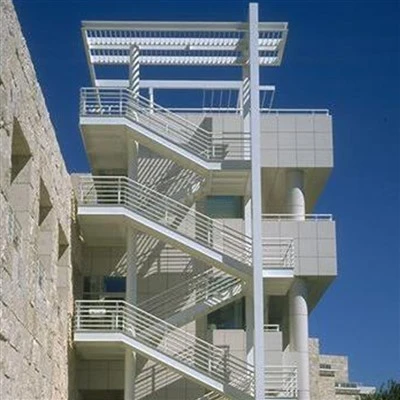
Stair-specific design is another big factor. Stairs in cold climates have unique wear points that standard designs don’t account for. The nosing of a step—the edge you step on—gets the most foot traffic, and it’s also where ice accumulates the most. A smooth steel nosing is a slip hazard, plain and simple. We add anti-slip serrations or rubberized grit inserts to every stair nosing for cold-climate projects. The serrations are cast right into the steel, so they don’t wear down over time, and the grit inserts are chemical-resistant, so they won’t deteriorate when exposed to salt or de-icers. We also slope the stringers (the side beams that support the steps) slightly to drain water away from the stair instead of letting it pool, which would freeze and expand, cracking the steps or warping the stringers. For outdoor platforms, we install snow guards around the edges to prevent large snow drifts from sliding onto the stairs and causing overloading. We recently completed a project for a grain elevator in North Dakota, where winter snow loads can hit 50 pounds per square foot. The platform’s snow guards and reinforced stringers kept the structure stable even during a January blizzard, and the anti-slip steps eliminated fall hazards when the spring thaw arrived.
Installation and maintenance are just as important as the materials we use. No matter how well-designed your steel platform is, if it’s installed incorrectly, it will fail in cold weather. We work with local contractors in cold-climate regions to make sure the foundation for the platform is frost-protected. If the foundation is set below the frost line, the ground doesn’t shift when it freezes and thaws, which prevents the platform from settling or tilting—another common cause of stair damage. For example, in Manitoba, one of our clients tried to install a platform on a foundation set at only 2 feet deep, where the frost line is 4 feet. By the end of the first winter, the platform had tilted 2 inches, making the stairs unusable. We had to re-install it with a deeper foundation, and the client admitted they saved $5,000 on installation upfront but paid $20,000 to fix the mistake.
Maintenance is also key, and we provide clients with a clear cold-climate care guide. We recommend inspecting the stairs after every major snowstorm to remove snow buildup, and wiping down the steps to clear slush before it freezes. We also tell clients to avoid using calcium chloride-based de-icers, which can damage the zinc coating and accelerate corrosion—instead, we recommend magnesium chloride or sand, which are gentler on steel. For coated platforms, we do an annual touch-up inspection to fix any small scratches or chips in the coating, which is much cheaper than repairing full-blown rust damage.
I know switching to cold-rated steel and specialized coatings can seem like a big investment, but when you compare it to the alternatives, it’s the only practical choice. There’s no “one-size-fits-all” when it comes to steel platforms for cold climates, and that’s why we customize every project to the specific conditions a client faces. Whether you’re in a subarctic region, a place that gets frequent freeze-thaw cycles, or a location with heavy industrial exposure to de-icing chemicals, we can engineer a steel platform with stairs that stands up to it.
If you’re working on a project in a cold climate and you’re tired of dealing with steel structures that fail every winter, let’s talk. We can send you a free site assessment, walk you through our material and design options, and help you find a solution that’s safe, durable, and cost-effective for your long-term needs. Reach out to us today to start the conversation.
Steel Structure Warehouse References
- American Society of Civil Engineers. (2020). Cold-Weather Steel Structures Design and Construction Guidelines. ASCE Press.
- Steel Market Development Institute. (2021). Ductile-to-Brittle Transition Temperature for Structural Steels in Cold Climates. SMDI Technical Report.
- National Association of Corrosion Engineers. (2019). Corrosion Control for Steel Structures in Winter Maintenance Environments. NACE International.
- Canadian Standards Association. (2022). Design of Steel Structures for Cold Regions (CSA G40.21). CSA Group.
- U.S. Department of Energy. (2021). Industrial Access Solutions for Cold Climate Facilities: Performance and Durability. DOE Office of Energy Efficiency and Renewable Energy.
Suzhou Wanyu Steel Structure Construction and Installation Engineering Co., Ltd.
With abundant experience, we are one of the most professional steel platform with stair manufacturers and suppliers in China. We warmly welcome you to buy customized steel platform with stair at competitive price from our factory. If you have any enquiry about pricelist, please feel free to email us.
Address: No. 78, Putian Road, Suzhou Industrial Park, Suzhou, Jiangsu Province
E-mail: Zhu@szwanyu.com
WebSite: https://www.wy-metalstructure.com/
